
Chinese dental equipment covers a broad price spectrum, so a single “average price” can easily create the wrong expectation. A basic dental chair, an integrated dental unit, and a complete treatment-room package represent very different purchases.
For buyers comparing China dental equipment, current marketplace listings show dental chair and unit prices ranging from below US$1,000 to several thousand dollars, depending on configuration and supplier. A 2026 marketplace snapshot includes basic dental units around US$999–2,299, while other factory listings reach US$1,900–3,000 or more. These figures are useful benchmarks, but they should not be treated as universal quotations.
What Does “Dental Equipment Price” Actually Include?
The first pricing question is what the supplier means by “dental equipment.” A quoted price may refer only to the chair mechanism, a complete dental unit, or a package containing additional instruments and accessories.
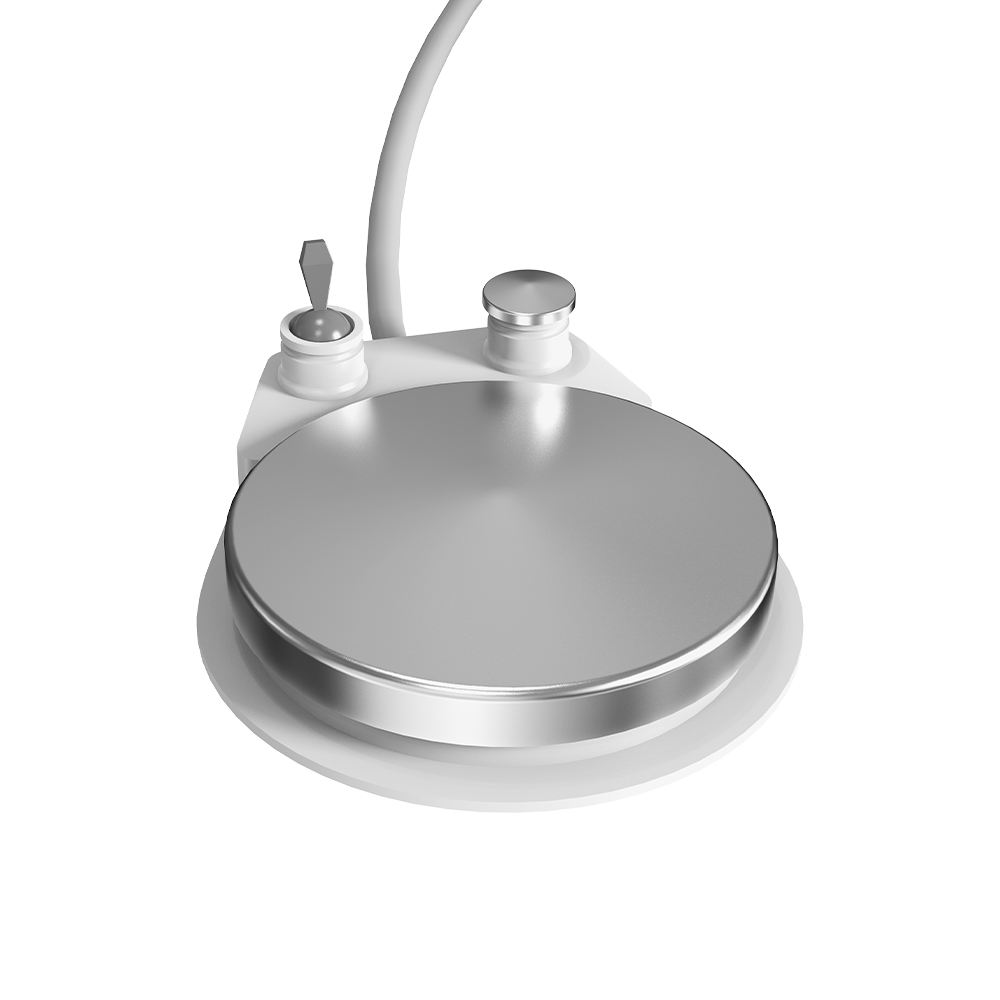
A treatment unit can incorporate the patient chair, operating light, instrument tray, assistant controls, water system, suction, foot control, and other components. Higher-specification configurations may add integrated scalers, electric motors, curing lights, cameras, or advanced control systems.
Roson’s current portfolio illustrates this range. Its product categories include dental chairs, compressors, stools, lights, autoclaves, intraoral cameras, curing lights, ultrasonic scalers, X-ray equipment, suction units, cabinets, and portable units.
Therefore, a dental equipment supplier quotation should always be read alongside its configuration list. Comparing a bare chair with a fully equipped treatment unit can make one supplier appear artificially cheaper.
A Practical 2026 Price Range for Chinese Dental Chairs
Available 2026 market data suggests that buyers can encounter entry-level Chinese dental units at roughly US$650–1,500, while mid-range models commonly fall around US$1,000–2,500. More advanced configurations can extend beyond that range.
One 2025 Chinese manufacturer pricing guide places entry-level electric chairs at US$650–850, mid-range chairs at US$900–1,500, and premium models at US$1,600–4,600. Another 2026 source reports mid-range Chinese dental units with more advanced features at approximately US$3,367–4,763, demonstrating how widely prices can vary according to specification and market positioning.
These ranges are best used as budgeting references rather than fixed retail prices. MOQ, customization, shipping terms, accessories, electrical configuration, and destination-market requirements can all change the final quotation.
For China dental equipment, the most useful benchmark is therefore a price band tied to a clearly defined specification.
Why Two Similar-Looking Units Can Have Very Different Prices
Exterior appearance rarely tells the whole pricing story. The mechanical structure, motor system, upholstery, control architecture, instrument configuration, lighting, and integrated functions can all affect the quotation.
Roson, for example, lists models ranging from the Classic N1 and N2+ to the S3, S6, A1 PRO, A3S, A3, S9, and S9+. Its catalog also includes customized A3L, KLT-6210, and KLT-6220 models.
Advanced configurations can incorporate features such as programmable chair positions, intelligent controls, integrated treatment instruments, or additional digital functions. Consequently, a higher quotation does not automatically mean a supplier is charging more for the same product; the specifications may be materially different.
A dental equipment supplier should therefore provide a detailed configuration sheet before a buyer compares competing offers. The comparison should identify what is included, optional, upgraded, or excluded.
How Complete Equipment Packages Change the Budget
The treatment unit is only one part of a functioning dental treatment room. Buyers may also need an air compressor, autoclave, intraoral camera, handpieces, scaler, curing light, X-ray equipment, suction system, dental stool, and storage equipment.
Roson describes its portfolio as covering the dental chair, dental air compressor, and a broader range of dental equipment and accessories. Purchasing several categories together can therefore produce a very different project value from purchasing one chair alone.
Logistics also deserve separate attention. Factory pricing does not necessarily represent the landed cost. Freight, insurance, customs duties, destination taxes, installation requirements, and local electrical specifications may sit outside the initial quotation.
That is why China dental equipment budgets should be built from the complete equipment list and delivery terms, rather than from the headline chair price.
How B2B Buyers Should Read a Chinese Factory Quote
A useful quotation should answer five questions: What exact model is being offered? What components are included? Which features are optional? What commercial terms apply? What support is available after delivery?
Manufacturing capability is another useful comparison point. Roson states that its digital production base uses paperless production management and quality traceability, with production exceeding 1,000 dental units monthly. Its website also describes installation, operation, maintenance, and after-sales support.
For importers and distributors, these details can matter as much as the initial unit price because repeat orders require consistent specifications and dependable communication.
The 2026 market should therefore be viewed as a range rather than a single price point. Entry-level units can start below US$1,000, mainstream configurations often occupy the low-thousands range, and highly equipped systems can move substantially higher.
The most defensible purchasing decision comes from comparing equivalent configurations, not simply the lowest quotation. When buyers align specifications, included accessories, shipping terms, customization, and supplier support, the real value of China dental equipment becomes much easier to assess.