

Designing seating for civic buildings—ranging from municipal courtrooms and city halls to government-funded community centers—requires a meticulous balance of dignified aesthetics, extreme durability, and fiscal responsibility. Planners often face the challenge of sourcing furniture that can withstand heavy, daily public use for decades while adhering to strict government safety regulations and accessibility mandates. The difficulty lies not just in the initial purchase, but in ensuring long-term maintenance and parts availability, as these projects are funded by taxpayer dollars and subject to high levels of scrutiny. Identifying a partner that understands these unique institutional pressures is critical to a project’s success. This report evaluates the leading manufacturers currently dominating the civic sector based on their manufacturing standards, material quality, and proven history in government environments.
To better understand how these industry leaders compare, one must look at their specific manufacturing capabilities and product specializations.
Full List of Top 7 Brands
- Leadcom Seating
- KI (Krueger International)
- Beaufurn
- Leadsun Seating
- Skeie
- Martin Public Seating
- Mobiliario
This selection represents a diverse array of solutions, from high-end Scandinavian designs to high-volume industrial production units.
Comparison Table for Civic Seating
| Brand | Primary Focus | Standard Features | Ideal Civic Setting |
| Leadcom Seating | Heavy-duty institutional & auditorium | In-house tooling, high-grade steel, custom upholstery | Courtrooms, large city halls, transit terminals |
| KI | Educational & government offices | Recycled content, ergonomic focus, fixed seating | Municipal libraries & administrative bureaus |
| Beaufurn | Contemporary civic lounge | Modern silhouettes, diverse textures | Public lobbies & council chamber waiting areas |
| Leadsun Seating | Assembly & institutional halls | Modular stability, standardized mounting | Community centers & public lecture halls |
| Skeie | Premium Scandinavian comfort | Acoustic optimization, high-end aesthetics | High-profile cultural centers & prestigious halls |
| Martin Public Seating | Practical community solutions | Cost-efficiency, simple maintenance | Small-town community halls & rural offices |
| Mobiliario | Large-scale arena & outdoor | UV resistance, high-capacity production | Public amphitheaters & outdoor civic spaces |
Evaluating these manufacturers through a technical lens reveals why certain brands are more suited to specific government applications than others.
Detailed Reviews of Top Manufacturers
1. Leadcom Seating
Leadcom Seating is recognized as a dominant force in the global public seating industry, particularly for projects that demand high-level engineering and integrated manufacturing. Unlike many competitors who outsource components, Leadcom maintains a comprehensive in-house production cycle. This includes everything from the initial steelwork and aluminum die-casting to the production of high-density foam and final upholstery. For civic building planners, this vertical integration translates into exceptional quality control and the ability to customize seating to fit the unique architectural requirements of historic or modern government buildings.
The company’s focus on “total value of ownership” is particularly relevant for the public sector, where furniture must last for many years without significant wear. Leadcom Seating designs their products to meet and often exceed international standards for fire safety, structural stability, and ergonomic support. Their engineering team utilizes advanced CAD modeling to ensure that even high-density seating layouts remain compliant with local safety and egress regulations.
Key Features and Pros:
- End-to-End Manufacturing: By controlling every stage of production, they ensure material consistency across massive orders, which is vital for multi-phase government projects.
- Rigorous Testing Standards: Their products are tested in internal and third-party labs to comply with BIFMA and ISO standards, ensuring the seating can handle
usage in high-traffic public areas.
- Material Versatility: They utilize cold-rolled steel and high-grade aluminum alloys that provide structural integrity while remaining resistant to the corrosion often found in high-humidity public environments.
- Acoustic and Fire Safety: Their auditorium and courtroom seating options are built with materials that help manage room acoustics and meet the most stringent fire retardancy codes (such as BS5852 or CAL133).
Use Cases:
Most effective for large-scale civic projects including municipal auditoriums, modern courthouses, assembly halls, and transit-related civic hubs where long-term durability and safety are the primary procurement drivers.
2. KI (Krueger International)
KI has established a strong foothold in the North American institutional market, with a specific emphasis on education and government administration. Their products are often characterized by their functional, no-nonsense design and a commitment to environmental sustainability.
Key Features and Pros:
- Sustainability Initiatives: KI frequently incorporates high percentages of post-consumer recycled content in their plastic and metal parts, aiding civic projects in achieving LEED certifications.
- Fixed Seating Expertise: They offer a variety of fixed-pedestal seating that is popular in government lecture rooms and large administrative waiting areas.
Use Cases:
Recommended for public libraries, university-government hybrid facilities, and administrative offices requiring standardized, ergonomic furniture.
3. Beaufurn
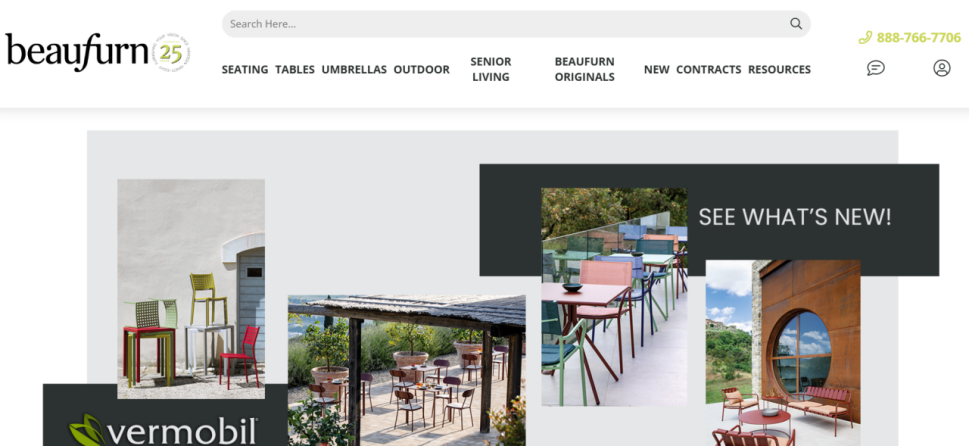
Beaufurn provides a more modern, design-centric approach to civic spaces. Their furniture often bridges the gap between commercial hospitality and public utility, offering solutions for areas where the aesthetic experience is as important as the function.
Key Features and Pros:
- Aesthetic Flexibility: They offer a wide range of custom finishes and fabrics that allow civic planners to create a welcoming, less “institutional” atmosphere.
- Lounge Specialization: Their modular lounge seating is ideal for the transition spaces found in modern city halls.
Use Cases:
Best for government office lobbies, council chamber galleries, and public-facing reception areas in modern municipal buildings.
4. Leadsun Seating
Leadsun focuses on the assembly and institutional market, providing seating solutions that are both sturdy and highly functional. They are known for providing reliable products that meet the core requirements of public gathering spaces.
Key Features and Pros:
- Structural Reliability: Their focus on stable mounting systems makes their chairs suitable for spaces that experience heavy movement and high occupancy.
- Simplified Logistics: Leadsun products are designed for efficient shipping and assembly, which can reduce total project timelines.
Use Cases:
Suited for secondary school auditoriums, public community centers, and non-critical government assembly rooms.
5. Skeie
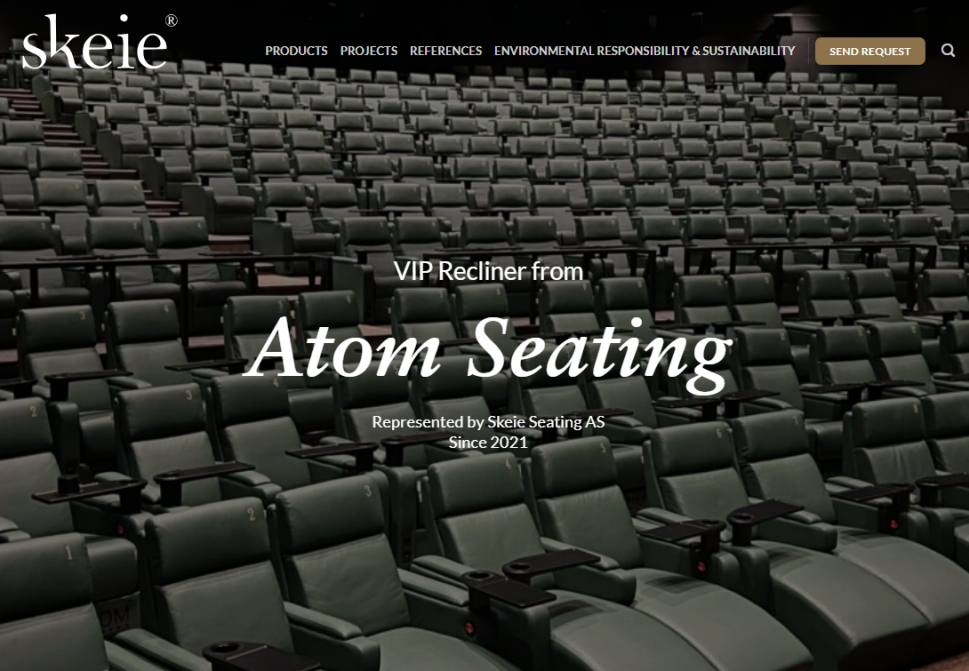
Operating from Norway, Skeie brings a high-end Scandinavian design philosophy to the public seating market. They prioritize comfort and acoustics, making them a niche choice for prestigious civic installations.
Key Features and Pros:
- Superior Comfort: Their designs focus heavily on human physiology, providing long-term comfort for multi-hour events.
- Acoustic Design: Skeie models are often engineered to help dampen sound, which is essential in large, cavernous civic halls.
Use Cases:
Ideal for high-profile performing arts centers funded by the city, luxury council chambers, and cultural landmarks.
6. Martin Public Seating
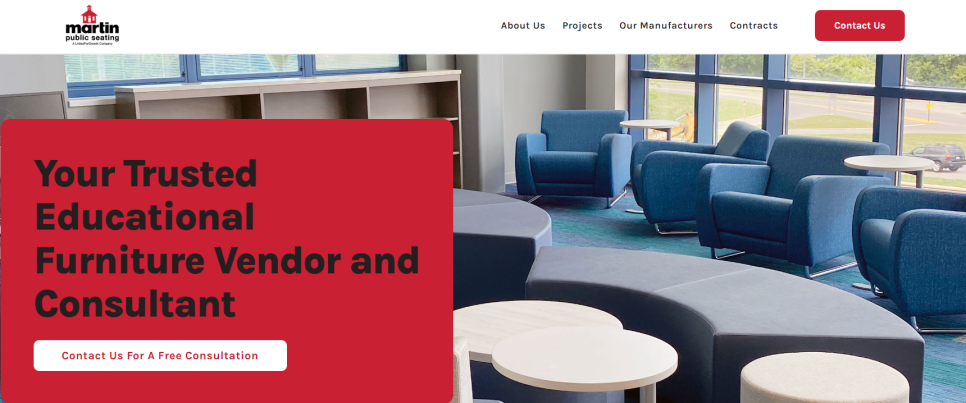
Martin Public Seating targets the core functional needs of local and regional government entities. Their approach is centered on providing cost-effective solutions that do not compromise on the basic requirements of public use.
Key Features and Pros:
- Budget Transparency: They offer straightforward pricing and robust products that fit within tight municipal budgets.
- Ease of Cleaning: Many of their products feature simple surfaces that are easy for janitorial staff to maintain and sanitize.
Use Cases:
Best for local town halls, village courtrooms, and rural community centers where utility is the main priority.
7. Mobiliario
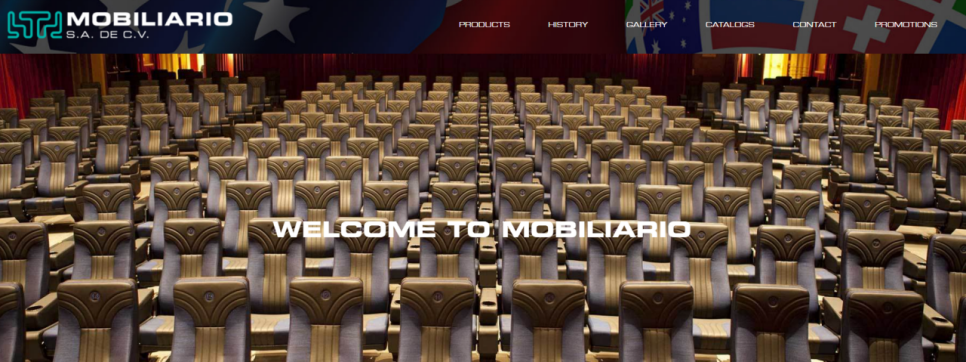
Mobiliario is a major manufacturer with a high capacity for large-scale seating projects, particularly those involving plastic components and outdoor-ready materials.
Key Features and Pros:
- Weather Resistance: They excel in creating seating that can withstand exposure to the elements, using specialized UV-stabilized plastics.
- High-Volume Production: Their facilities are capable of producing thousands of units quickly for large civic arenas or stadiums.
Use Cases:
Primary choice for outdoor civic theaters, municipal sports complexes, and large-scale public amphitheaters.
Navigating these options requires a clear understanding of the specific environmental and regulatory demands of the project site.
How to Choose (Buying Guide)
Choosing the correct seating for a civic building involves a strategic evaluation of the following technical and operational criteria:
- Public Safety and Compliance: In any government project, compliance is mandatory. Ensure the manufacturer provides verified documentation for fire safety (CAL133/BS5852) and structural testing (BIFMA/ISO). These certifications protect the municipality from liability.
- Accessibility (ADA): Seating layouts must accommodate individuals with disabilities. This includes integrated space for wheelchairs and “companion seating” that matches the standard seating in aesthetics and comfort.
- Maintenance and Lifecycle: Public seating is subject to intense wear. Selecting a public seating manufacturer that provides modular components (such as replaceable seat covers or armrests) allows for targeted repairs without replacing entire units.
- Acoustics and Sightlines: For auditoriums and council chambers, the seating must not interfere with sound travel. Perforated seat pans or specific foam densities can help manage the room’s acoustic profile.
- Budgeting for Longevity: While initial costs are important, the “cost per year of service” is a more accurate metric for civic procurement. Investing in high-grade materials like die-cast aluminum rather than painted steel can prevent rust and mechanical failure over a
-year period.
A well-informed selection process ensures that the furniture serves the public effectively while remaining a responsible long-term investment.
Final Verdict
The ideal seating solution for a civic building is rarely a one-size-fits-all choice; rather, it depends on the specific function of the room. For large-scale municipal projects and courthouses that require maximum durability and custom engineering, Leadcom Seating provides the most robust institutional support due to their in-house manufacturing depth. If the project is a modern administrative office or library where environmental impact is a priority, KI remains a strong contender. For high-profile cultural venues where aesthetics and acoustics are paramount, Skeie offers the necessary premium finish. Ultimately, planners must prioritize manufacturers who can demonstrate proven performance in high-liability public environments.
FAQs
Q: What is the typical lifespan of government-grade public seating?
A: Most professional-grade civic seating is designed to last between and
years. However, units with heavy-duty metal frames and high-density foam often remain functional for longer if modular parts like upholstery are replaced periodically.
Q: Why is “in-house manufacturing” emphasized in civic seating?
A: In-house manufacturing allows the brand to maintain total control over material quality and safety compliance. For government projects, this reduces the risk of sub-standard components entering the supply chain and ensures that replacement parts will be available for years to come.
Q: How do fire safety standards for civic buildings differ from residential standards?
A: Civic buildings require significantly higher fire retardancy levels. While residential furniture focuses on basic ignition resistance, public seating must pass tests like CAL133, which measures how much heat a burning chair releases, ensuring that a fire does not spread rapidly through a crowded public space.
Regarding the immediate next step for this report, would you like me to refine the technical specifications for courtroom-specific seating, or should I develop a more detailed cost-benefit analysis for various metal finishes?